 Any Faces 20 November 2026
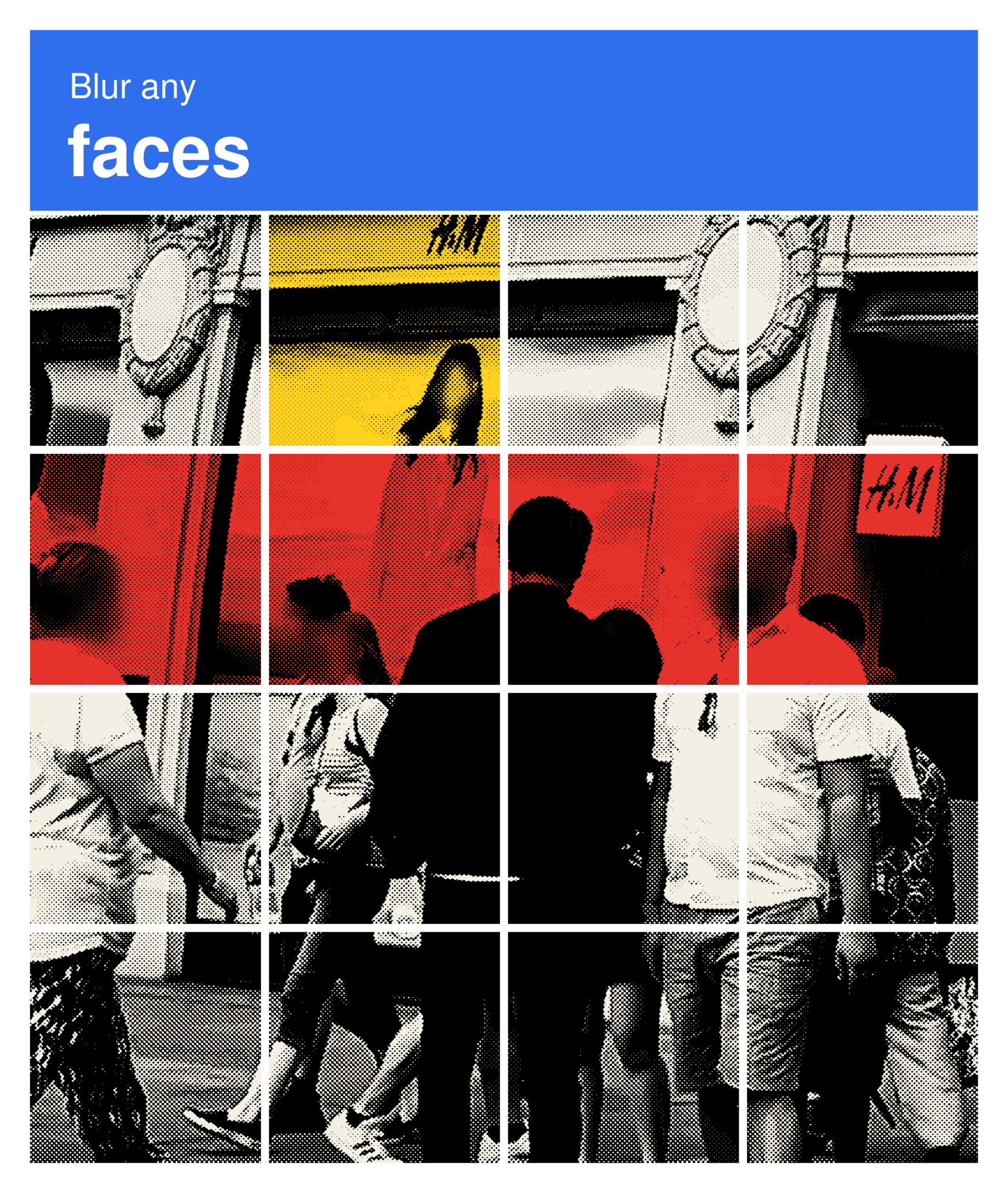
A camera car's machine was told to blur any faces. Red is the squares where it did. Yellow is the face on the screen in the shop window, which it blurred as well.
The band is the start of Mapillary's own sentence: it uses technology designed to "blur any faces and license plates our algorithms detect". It is an instruction given to a machine, not a test set for people. No test asks for faces.
The yellow is not my opinion of advertisements. Mapillary has a second machine, which names things. It outlines every walker here as a person, and the place where the model's face is as an advertisement and nothing else. One machine found a face there and the other found no one. I checked five points.
The red makes a row because people's heads are at about the same height. The model's is higher. The man in black shows no face; his square is red for his neighbour's.
I blurred nothing and unblurred nothing. The blur has no outline I can fetch, so the colour is by whole squares. It is in the photograph as Mapillary serves it, and it comes through the dots as soft blots.
Photograph: erias / Mapillary, image 637146150744986, Oxford Street at Oxford Circus, London, 23 July 2022, CC BY-SA 4.0. This picture carries the same licence.
Rebuild
LIFT=12 tools/squares.sh src/637146150744986.jpg 760x760+0+1130 4 4 "P Y P P R R R R P P P P P P P P" "Blur any" "faces" out.png
Not kept
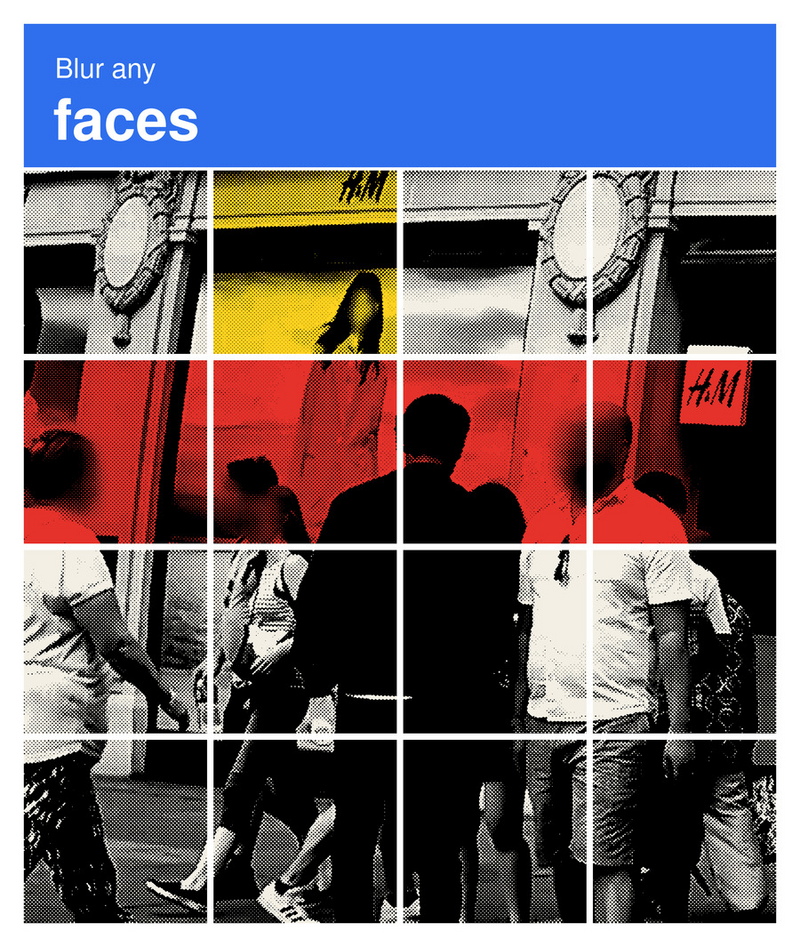 Blacks left alone. The shop window is a black slab and the model is lost in it.
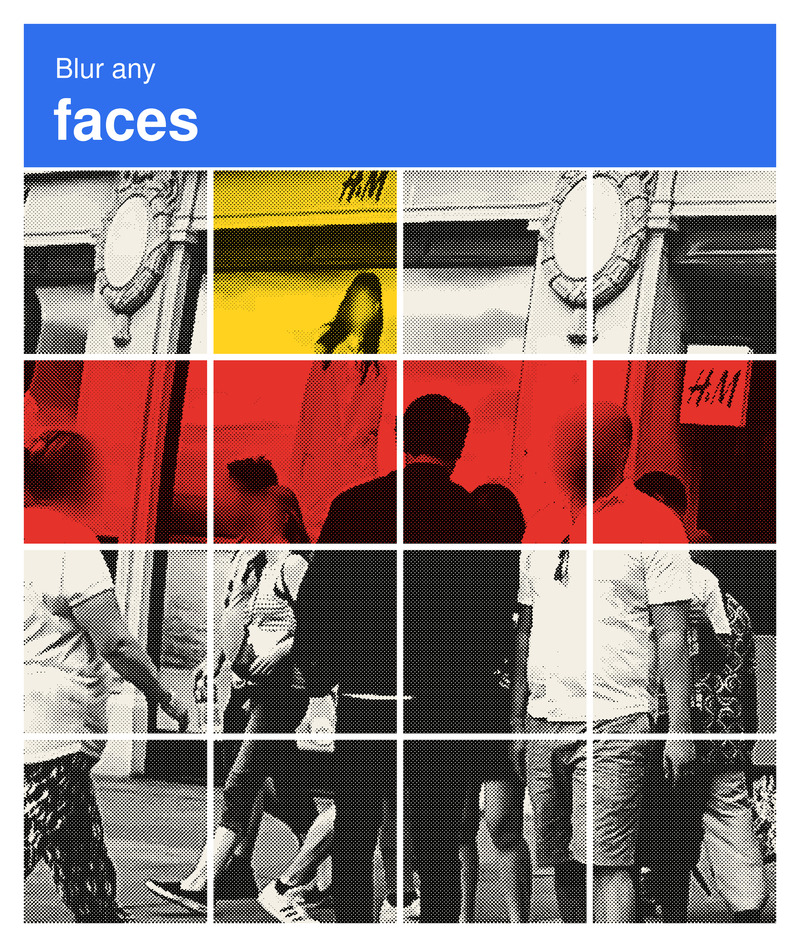 Blacks raised too far. Everything goes grey and the blots stop standing out from the dots.